What's the V2G benefits and advantages?
What's the V2G benefits and advantages?
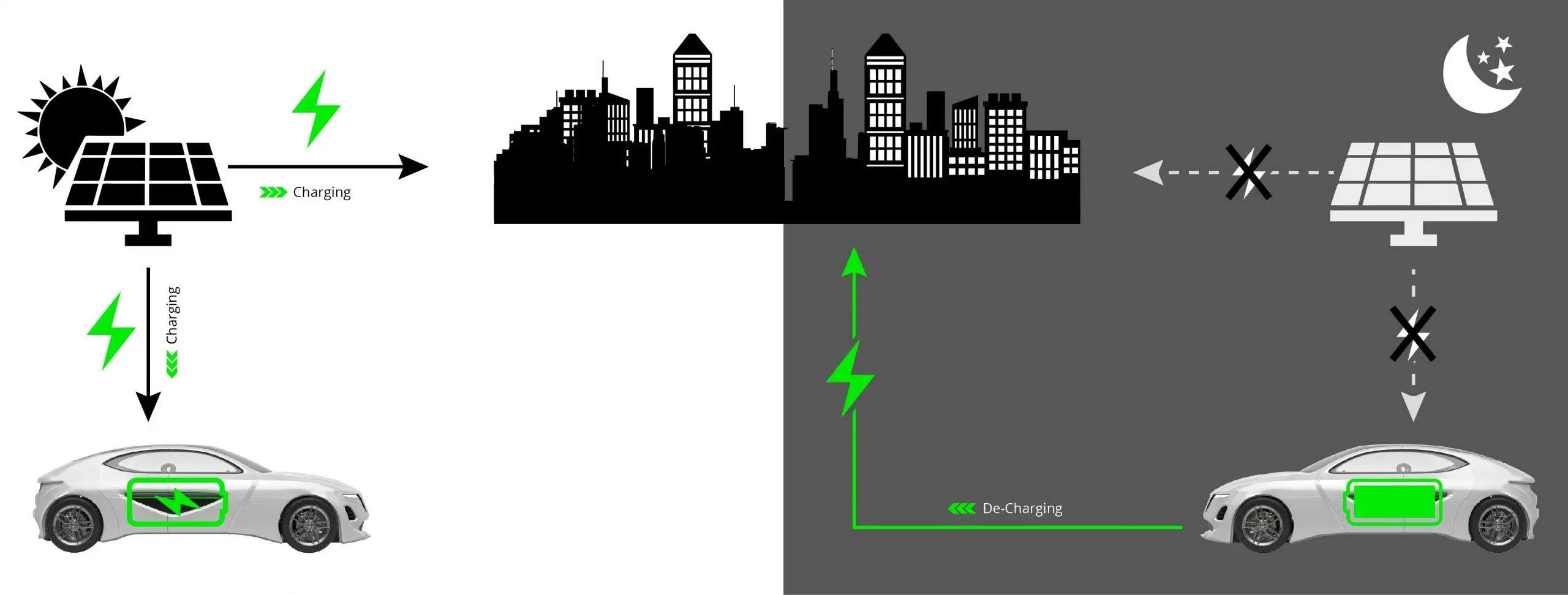
Vehicle-to-Grid (V2G) is a bidirectional charging technology that allows electric vehicles (EVs) connected to compatible charging piles (stations) to not only draw electricity from the power grid but also discharge stored energy from their batteries back into the grid.
In essence, V2G turns parked EVs into mobile, distributed energy storage assets rather than just passive loads. It is part of the broader Vehicle-to-Everything (V2X) family, which also includes Vehicle-to-Home (V2H) and Vehicle-to-Load (V2L), but V2G specifically focuses on interaction with the public electricity grid.
Principle / How It Works
Traditional EV charging is unidirectional (power flows only from grid → charger → vehicle battery). V2G requires bidirectional charging equipment and compatible vehicles:
1. Hardware: A bidirectional charger (often DC, sometimes AC) that can convert AC power from the grid to DC for charging the battery, and reverse the process (DC to AC) when discharging back to the grid. The charger must synchronize with grid frequency and voltage.
2. Vehicle capability: The EV must support bidirectional power flow (via onboard inverter or compatible architecture). Many newer models from manufacturers such as Hyundai/Kia, Nissan, Renault, Volkswagen Group, Ford, GM, BYD, and others are increasingly equipped for this.
3. Communication and control: Smart systems (using protocols like ISO 15118) exchange real-time data between the vehicle, charger, aggregator/utility, and grid. An energy management platform or aggregator decides when to charge or discharge based on:
- Grid conditions (peak demand, renewable generation surplus, frequency/voltage needs)
- Electricity prices
- User preferences (e.g., minimum state-of-charge for driving, departure times)
When the grid has excess renewable energy or low prices, the EV charges. When demand peaks or prices rise, the EV can discharge a controlled portion of its battery capacity. Aggregators pool many EVs into a virtual power plant (VPP) for meaningful scale, since a single vehicle’s battery is relatively small.
Advantages
- For the grid: Provides flexibility for peak shaving, frequency and voltage regulation, spinning reserves, and better integration of intermittent renewables (solar/wind). This reduces the need for expensive peaker plants and costly grid upgrades. Studies show V2G can deliver significantly higher value (sometimes 5–15×) than unidirectional managed charging (V1G).
- For EV owners: Potential revenue or bill credits (estimates often range from several hundred to over $1,000 per year depending on market and participation), lower effective operating costs, and the possibility of free or near-free driving through energy arbitrage and incentives. It can also support home backup in related V2H modes.
- System-wide and environmental: Improves overall grid resilience and reliability, maximizes use of existing battery assets (most EVs sit parked >90% of the time), reduces curtailment of renewables, and supports higher EV adoption without overloading infrastructure.
- Economic scale: Aggregated EV batteries can act as a large distributed storage resource with lower land, permitting, and capital costs than dedicated stationary batteries.
Challenges include battery degradation concerns (mitigated by limited depth-of-discharge, smart controls, and modern battery chemistries), the need for compatible hardware and standards, regulatory barriers (e.g., double grid fees or interconnection rules in some places), and ensuring user mobility needs are never compromised.