Why OCPP-Enabled Portable EV Chargers Are Becoming Essential In Future?
Why OCPP-Enabled Portable EV Chargers Are Becoming Essential?
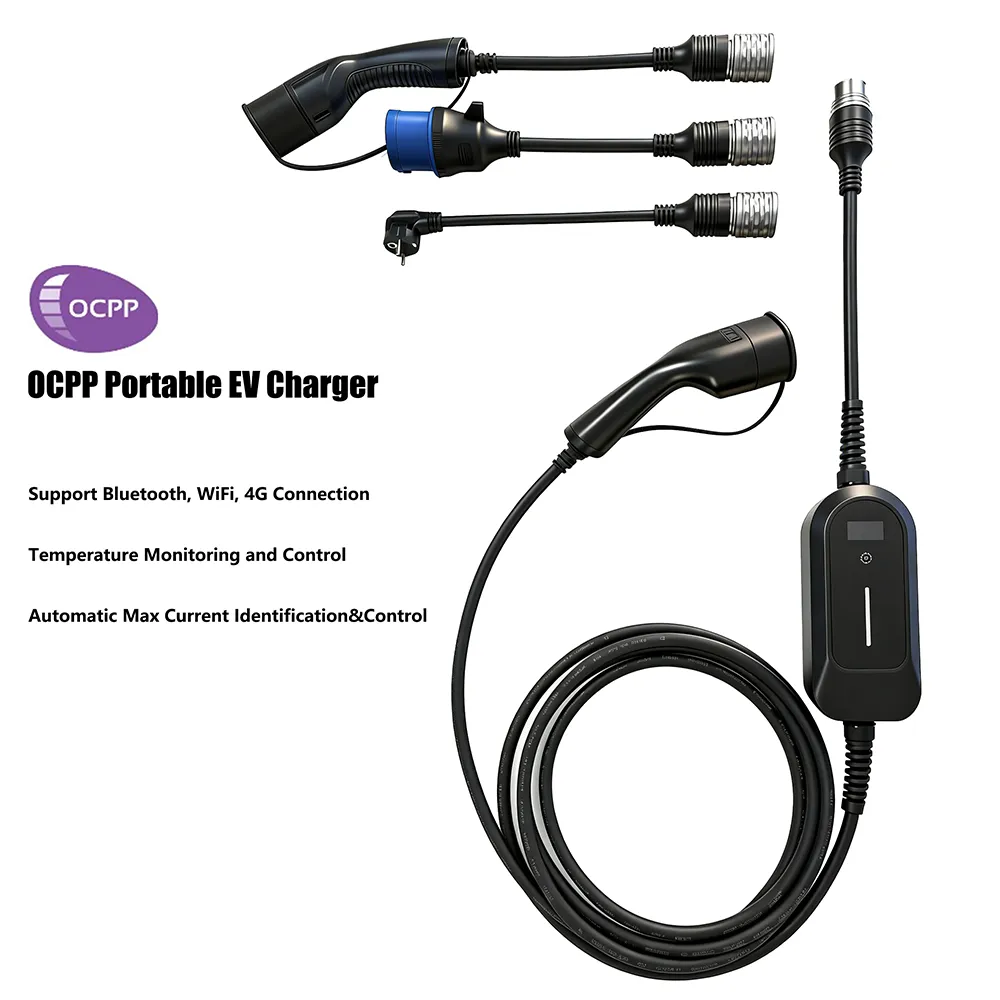
As electric vehicles continue to gain momentum worldwide, the demand for flexible and intelligent charging solutions is growing rapidly. While fixed charging stations remain an important part of the charging infrastructure, portable EV chargers with OCPP support are emerging as a highly valuable solution for both individuals and charging network operators.
A portable charger that supports OCPP 1.6J, along with Wi-Fi and 4G connectivity, brings the convenience of mobility together with the power of smart charging management. This combination is opening new possibilities across many use cases in the EV ecosystem.
Smart Charging Anywhere with OCPP 1.6J
OCPP (Open Charge Point Protocol) is the global standard for communication between charging devices and charging management systems. A portable charger supporting OCPP 1.6J can connect directly to a backend platform, enabling operators to monitor, control, and manage charging sessions remotely.
With OCPP integration, users and operators can benefit from features such as:
·Remote start and stop charging sessions
·Real-time monitoring of charging status
·Energy usage data collection
·Time-based or energy-based billing
·Integration into existing charging networks
This makes a portable charger more than just a simple power device—it becomes a smart charging terminal that can operate within professional charging infrastructures.
Seamless Connectivity with Wi-Fi and 4G
Connectivity plays a critical role in smart charging. Portable EV chargers equipped with Wi-Fi and 4G communication allow devices to connect to backend platforms anytime, anywhere.
Wi-Fi is ideal for home or workplace environments where local network access is available, while 4G connectivity ensures stable communication when chargers are used outdoors or in locations without Wi-Fi coverage.
With these communication options, users can enjoy:
·Stable connection to OCPP platforms
·Remote diagnostics and maintenance
·Real-time charging data transmission
·Flexible deployment without fixed network infrastructure
This ensures that portable chargers remain fully functional even in remote or temporary charging locations.
Flexible Power Access with Interchangeable Plug Adapters
One of the key advantages of portable EV chargers is their adaptability. Advanced portable chargers can be equipped with manually interchangeable plug adapters, allowing users to easily switch between different power sources.
By replacing the plug adapter, the same charger can be used with various socket types commonly found across regions and environments. For example:
·Schuko plug adapters for standard household outlets
·CEE single-phase plugs for moderate power charging
·CEE three-phase plugs for higher power charging
This modular design allows a single portable charger to support multiple power standards, making it highly practical for international users, fleet operators, and EV drivers who frequently travel.
Key Application Scenarios
Emergency Charging
Portable chargers serve as an excellent backup solution when drivers cannot access a public charging station. With a portable charger, EV owners can charge their vehicles from available power outlets in garages, workshops, or residential locations.
Temporary Charging Installations
For events, exhibitions, construction sites, or temporary parking areas, installing permanent charging stations may not be practical. OCPP-enabled portable chargers can be quickly deployed while still allowing operators to manage charging sessions through their backend platform.
EV Dealerships and Service Centers
Dealerships and service workshops often need flexible charging solutions for vehicle testing, maintenance, or demonstrations. Portable chargers allow staff to charge vehicles anywhere within the facility.
Fleet Operations
Fleet managers can use portable chargers for logistics fleets, company vehicles, or electric taxis. With OCPP connectivity, charging sessions can still be monitored and managed through centralized platforms.
Travel and Cross-Region Charging
Drivers traveling between regions may encounter different socket standards. Chargers with interchangeable plug adapters allow EV owners to connect to various outlets without needing multiple chargers.